








Neue Gesichter im Vorstand
Am 15. April 2024 hat der Trägerverein des Jüdischen Museums Westfalen einen neuen Vorstand gewählt....
 Das neue
 Wir laden wieder zu vielen Veranstaltungen ins Museum ein
 Zwei Sonderausstellungen
14. April – 2. Juni 2024
Jüdische Postkarten und das Werk „Davidstern“
 Marc Raschke:
 2. Mai 2024
Was haben wir den social media Strategien der extremen Rechten entgegenzusetzen? Wie sollte eine Strategie aussehen, die es mit den Demokratie-Feinden im Internet aufnehmen kann?
 Fake news, Verschwörungsmythen
 3. Mai 2024
Digitale-Kompetenz – Die Identifizierung von Fake News
 Fortbildung
 6. Mai 2024
Handlungsstrategien und pädagogische Ansätze
 Jeder schreibt für sich allein
12. Mai 2024
Ein Film über die von 1933-1945 in Deutschland verbliebenen Schriftsteller und Schriftstellerinnen
 Jüdisches und muslimisches
 22. Mai 2024
Wir besuchen die Blaue Moschee in Herten
 Die Stadt Dorsten
 23. Mai 2024
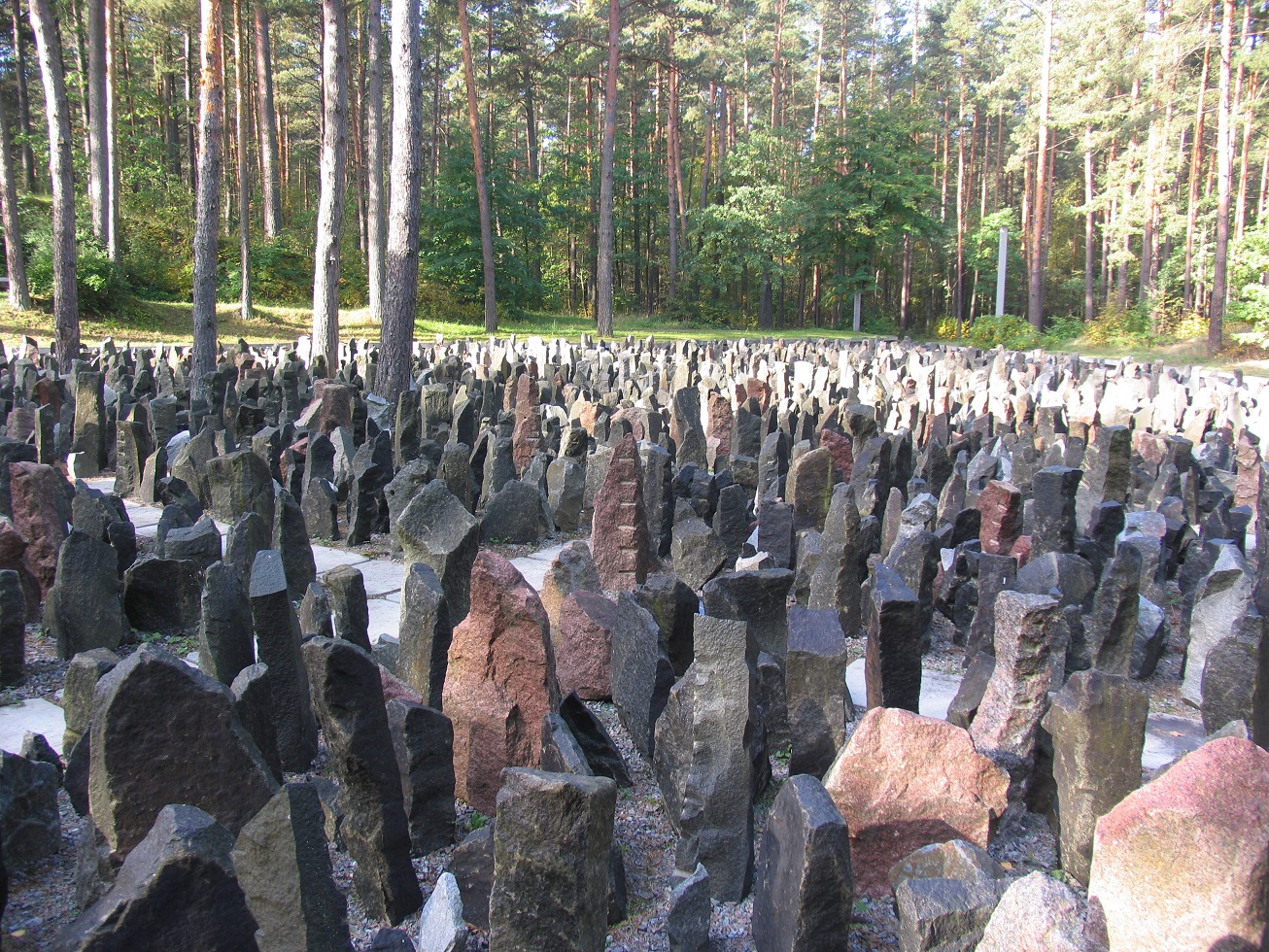
Winfried Nachtwei ist ehemaliger Bundestagsabgeordneter (Die Grünen) und referiert über das Riga-Komitee, in dem Dorsten seit Februar Mitglied ist

Am 15. April 2024 hat der Trägerverein des Jüdischen Museums Westfalen einen neuen Vorstand gewählt....
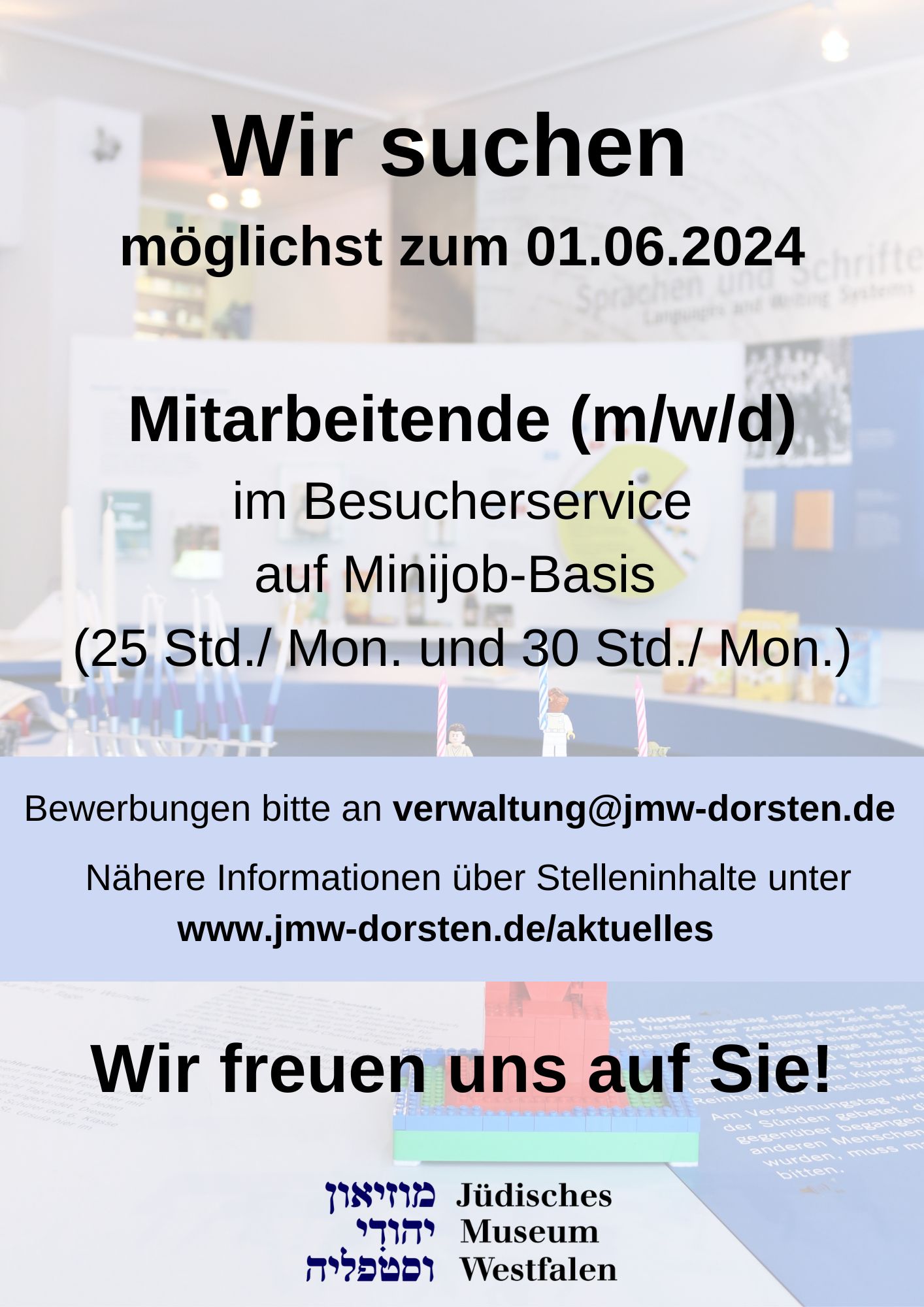
Das Jüdische Museum sucht zwei neue Mitarbeitende, die an der Rezeption die Gäste begrüssen, Buchungen entgegennehmen, Tickets verkaufen, das Telefon beantworten und Auskünfte erteilen. Klingt das für Sie spannend? Dann schauen Sie sich unsere Stellenbeschreibung an und melden Sie sich. Interesse an Geschichte oder Religion sind ein Vorteil, Fachkenntnisse auf den Gebieten sind aber nicht erf...
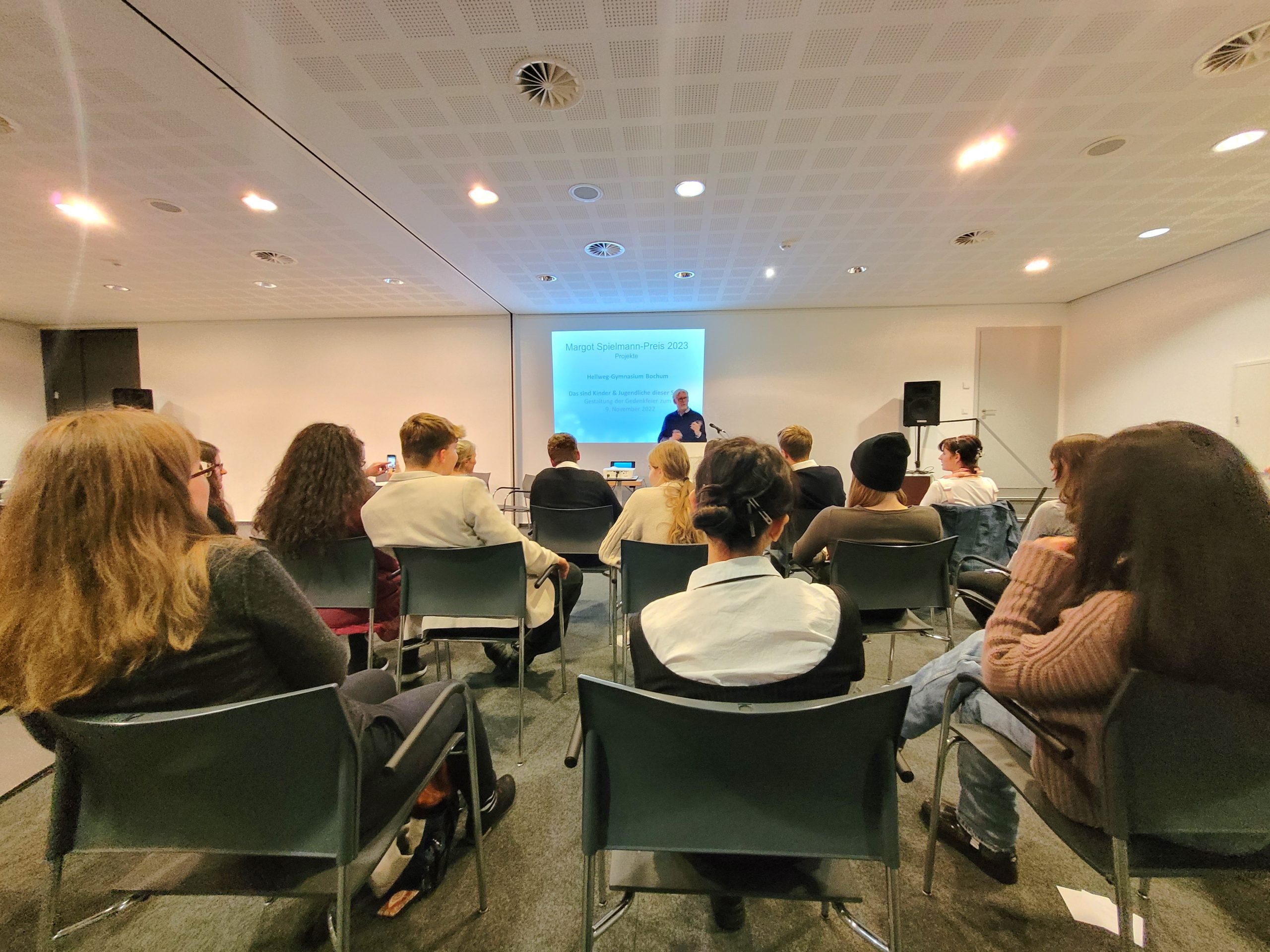
Der Margot Spielmann-Preis des Jüdischen Museums Westfalen zählt inzwischen schon zu den Traditionsveranstaltungen. In den vergangenen Jahren konnten fast 40 Jugendliche mit dem Margot Spielmann-Preis für Facharbeiten und ca. 25 Projekte von Schulen bzw. Gruppen mit dem Preis für Projekte ausgezeichnet werden. Dabei war die......
Wir treten ein für jüdische Kultur und Menschenrechte, Vielfalt und gesellschaftliche Beteiligung der Menschen jeder Religion und Herkunft. Unser Impuls ist die Geschichte der Diskriminierung, Verfolgung und Ermordung, aber auch der Emanzipation und Teilhabe von Juden in Deutschland.
Wie? Lesen Sie mehr!

Das Jüdische Museum Westfalen wird kontinuierlich gefördert von:
Stadt Dorsten, Kreis Recklinghausen, Land Nordrhein-Westfalen, Landschaftsverband Westfalen-Lippe, Stiftung Jüdisches Museum Westfalen, Sparkasse Vest Recklinghausen sowie Emscher-Genossenschaft | Lippe-Verband.
